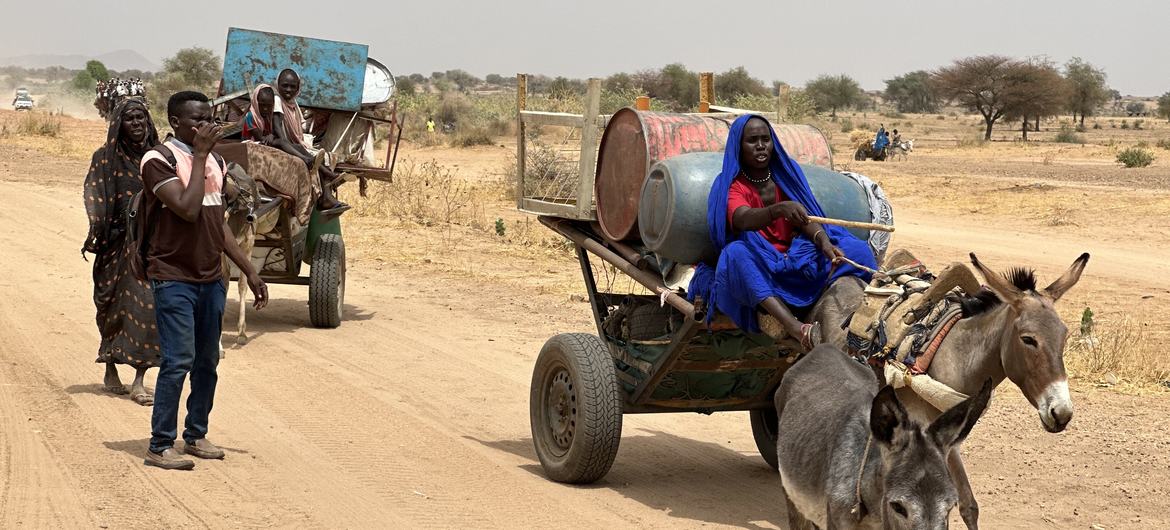
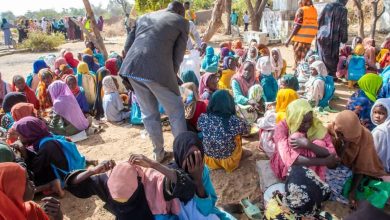
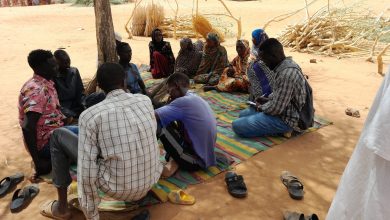
As the Sudanese Armed Forces (SAF) takes control of most of the central part of the country and the Rapid Support Forces (RSF) retreat toward the Kordofan and Darfur regions, the Kordofan region has become the primary front line and the stage for the most violent confrontations and open battles. This has triggered one of the largest cycles of displacement in the region.
The ongoing and intensifying battles are pushing toward a humanitarian catastrophe, turning the region into a massive focal point for displacement fueled by continuous flight. Meanwhile, the world ignores forgotten communities exhausted by repeated displacement, despite warnings of worsening catastrophic conditions and the crisis sliding into a humanitarian nightmare, especially in South Kordofan.
The Stricken Refuge
While Khartoum and several cities under army control in the central and eastern parts of the country experience relative calm, battles have continued over the past months between the army and the RSF on the Kordofan and Darfur fronts. These are the fiercest confrontations of their kind by land and air in the states of North, South, and West Kordofan, as well as North and West Darfur.
Before the fires of battle reached it, the Kordofan region served as a haven for those fleeing the fighting. It bore a heavy burden by hosting an estimated one million displaced persons distributed across 1,936 sites in 36 areas. This includes 222,942 displaced persons in North Kordofan, 383,558 in South Kordofan, and 416,654 in West Kordofan, placing significant pressure on scarce local resources that erode with every new wave of displacement.
Since the RSF took control of the cities of Al-Nuhud, Al-Khuwai, Al-Fula, and surrounding villages in May 2025, the region has faced difficult and worsening humanitarian conditions. Thousands have fled rural areas and towns in North Kordofan for the cities of El Obeid and Al-Mazroub in the same state. Thousands of others headed outside the region north toward the city of Al-Dabbah in Northern State, while some chose open plains without the minimum necessities for a dignified life.
Signs of Collapse
Military and humanitarian specialists point out that as fighting intensifies, dangerous indicators of a growing humanitarian collapse have begun to appear silently across various areas of the region. This follows the cessation of humanitarian convoys, the imposition of fees and levies on relief, the targeting and looting of aid, and the expansion of military operations.
According to updated UN reports, the intensification of confrontations and escalating battles caused the number of displaced persons in the region’s states to rise by approximately 88,316 people. They fled from 69 different areas in the region in just two months, between October 25 and mid-January.
Although there are no detailed statistics for each state individually, reports indicate widespread displacement from fighting zones in North Kordofan, especially towns and villages around the city of El Obeid and the border areas between North, South, and West Kordofan. This was particularly evident after the RSF took control of the city of Babanusa and the Heglig oil field, followed by the flight of hundreds of families.
Dozens of Incidents
In South Kordofan state alone, field tracking teams from the International Organization for Migration (IOM) recorded 65 displacement incidents, along with 18 incidents in North Kordofan and one incident in West Kordofan during the same period. About 25 percent of the total displaced reached North Kordofan state, concentrating in the Sheikan and Al-Rahad localities, which became overcrowded amid a scarcity of services, eroding resources, and a lack of support for the displaced and host communities.
White Nile State received 21 percent of the displaced from Kordofan. The state’s major cities of Kosti, Rabak, and Ed Dueim turned into the largest reception points, becoming humanitarian contact zones absorbing the complications of the fighting across all of Kordofan.
Empty Cities and Villages
According to the Dar Hamar Emergency Room in West Kordofan, 90 villages in the vicinity of the city of Al-Khuwai face a major humanitarian disaster after the city was completely emptied of its residents. It has turned into an arena for crime and systematic looting affecting homes and mosques.
The emergency room noted that the RSF’s imposition of forced prices on crops, control over transportation and water sources, and looting of livestock have further complicated the situation and exacerbated the humanitarian crisis. Additionally, the elderly have been targeted with violence and detention.
In a related context, Jan Egeland, Secretary-General of the Norwegian Refugee Council, warned following his visit to South Kordofan on February 1 that the tragedy in the region is man-made. He stated it is turning into a real nightmare or a certain humanitarian disaster after the area became the most dangerous and isolated place in Sudan.
Egeland described South Kordofan as the most dangerous and neglected front in the Sudan war. He noted that civilians there told him they are constantly bombed and attacked, saying, “After the atrocities of El Fasher, another disaster cannot be allowed to unfold unresolved before the eyes of the world.”
A statement from the IOM confirmed that its teams monitored the displacement of 4,315 people in a single day during the past two days from villages in the Al-Quz and Habila areas in South Kordofan state.
Additionally, 85 people fled the capital Kadugli and 200 people fled the town of Al-Kuwayk in the eastern countryside of the same state due to insecurity, heading south toward White Nile State and West Kordofan State.
Emergency of the Crisis
In this context, humanitarian affairs specialist and former Humanitarian Aid Commissioner in Khartoum, Mustafa Adam, explains that the situation in Kordofan requires major emergency work to avert this escalating humanitarian crisis. Foreign and UN organizations need to handle the situation flexibly to provide what is possible under such conditions.
Adam pointed out that it has become difficult to find a safe haven in Kordofan except by reaching central Sudan, which is costly for those fleeing. He called on authorities to take precautions by preparing and equipping shelter centers with sanitation and environmental health standards. He warned of the worsening conditions of the displaced inside the city of El Obeid, which is overcrowded with successive waves of displacement. He noted a movement starting from the city toward the north of the country due to fear of repeated drone strikes, at a time when the displacement journey itself involves great risks to the lives of those fleeing.
He continued, “Despite the instability of statistics, the numbers of displaced people remain large and are increasing every moment. Furthermore, there are difficulties in the displacement process itself, especially for families with children and the elderly who lack the resources to flee. Therefore, such families often end up in areas harsher and more difficult than those they fled.” He called for the preparation of decent centers to house those fleeing, especially as capacity issues have emerged with the increasing numbers.
Food Gap
For his part, conflict resolution and peacebuilding specialist Amir Abdel Latif explains that the continuation of bloody confrontations and the centering of battles around El Obeid, the capital of North Kordofan, along with the frequent exchange of control over surrounding towns, may lead to an accelerated humanitarian collapse. This would happen by striking food security and opening a new front of suffering that exceeds available relief capabilities. This is in addition to supply disruptions, frequent market closures, and traders resorting to hoarding and monopolies. Such factors deepen the growing food and living crisis resulting from the disruption of the agricultural season and the insane rise in food grain prices to more than triple their cost, alongside fuel and transportation crises.
Abdel Latif warned that any security breach in El Obeid would have a doubled impact and could lead to the suffocation of the entire region. Besides hosting more than a million displaced persons, the city has become the most important center for commercial movement, relief convoys, and the link between western, central, and northern Sudan.
The War Corridor
The peacebuilding specialist noted that using roads to transport troops and weapons and militarizing villages located on the national road have turned North Kordofan into the largest and widest war corridor. Civilians in those areas have found themselves in a situation similar to human shields.
He added, “Displacement has deprived citizens of farming tools and consequently exacerbated waves of displacement. Families have been forced to consume their living capital, represented by livestock, and leave rural areas for El Obeid. Others have sought refuge in informal settlements without water or sanitation, as the region’s cities have lost their capacity to absorb them, amid security and social indicators of weapon proliferation among civilians.”
Relieving Pressure
Observers believe that the steady field progress made by the army and Joint Forces and their control over strategic sites—contrasted with the decline of RSF capabilities in South Kordofan after lifting the siege on the city of Dilling—will also lead to lifting the siege on the city of Kadugli. This will contribute to relieving pressure on civilians and securing the region’s main cities and their surroundings.
The Sudanese army announced in the last week of January that it had managed to enter Dilling, the second-largest city in South Kordofan, after nearly two years of siege imposed by the RSF and the allied SPLM-N led by Abdelaziz al-Hilu.
Escalation and Drones
Since the beginning of 2025, the Kordofan region has witnessed a violent military escalation in battles between the army and the RSF. This ended with the army making extensive progress in North and South Kordofan last month, resulting in the lifting of the siege on Dilling.
During the battles, the use of drones increased significantly, particularly by the RSF, which targeted civilian and military sites in several areas, focusing on El Obeid. Meanwhile, the air force continues its strikes on RSF gatherings in various parts of the region.
In what resembles a sharing of territorial control, the army controls the major cities (El Obeid, Kadugli, and Dilling), while RSF forces are spread across rural areas, some oil fields, and several main and branch roads.
The Land Bridge
Geographically, the Kordofan region is located in central and southern Sudan, bordered to the west by the Darfur region and to the east by the White Nile Valley. Its strategic location makes it a land bridge between the east and west of the country. It is currently witnessing rapid field shifts that are redrawing the map of the Sudanese conflict.
Administratively, it is divided into three states: North Kordofan (capital El Obeid), South Kordofan (capital Kadugli), and West Kordofan (capital Al-Fula).
Economically, the region is famous for producing gum arabic, oil resources, agriculture, and massive livestock. It is often called “Miniature Sudan” due to its richness and ethnic and environmental diversity.