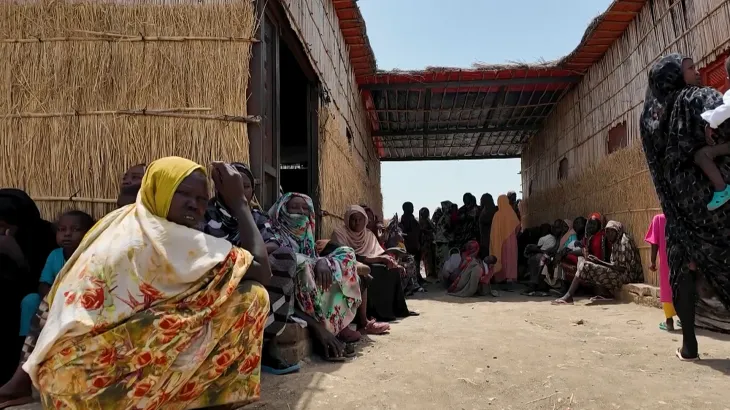
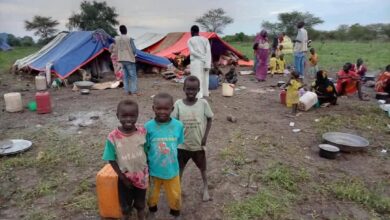
On the outskirts of the city of Damazin in Blue Nile State, where tents lean against each other as if seeking shelter from the harshness of reality, life inside one of the largest displacement camps resembles a daily battle against disease and poverty—especially with the approaching rainy season that threatens to worsen the crisis.
In Karama Camp (3), which hosts thousands of families fleeing the horrors of war, an Al Jazeera correspondent from inside one of the largest camps in Damazin, the capital of southeastern Sudan, paints a grim picture of suffering. Pain rarely leaves the faces of residents, and heartbreaking stories echo in every corner.
Fatima, a displaced mother, sits beside her child weakened by illness, watching his fluctuating fever with eyes heavy with helplessness.
She says her son has been suffering for days from diarrhea and fever that worsens at night. She managed to obtain part of the treatment but could not complete it due to lack of money. In this place, medicine becomes a luxury, and life itself is held hostage by one’s ability to endure pain.
Inside an overcrowded health point, hundreds of patients—most of them children—are packed together. Frail bodies worn down by malnutrition, others struggling with fever and diarrhea, while adults suffer from malaria and chronic skin diseases. The few available medical staff can hardly keep up with the constant influx of cases.
Aisha, a health worker in the camp, explains that schistosomiasis has become one of the most widespread diseases, a direct result of water contamination. Out of necessity, residents resort to using water from the nearby river for bathing and drinking, despite the risks. There, where need meets danger, water itself becomes a daily threat.