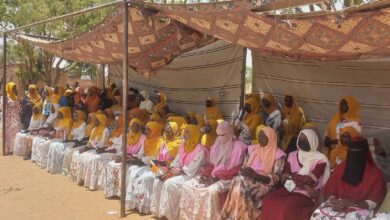
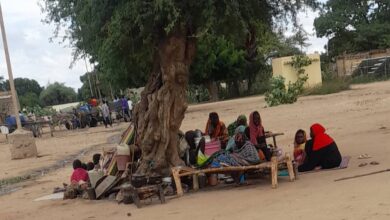
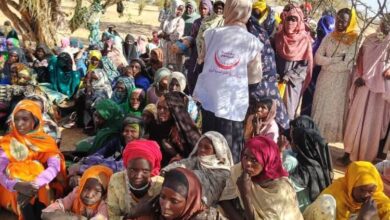
Economic conditions in Sudan have worsened, and the joy usually associated with festive occasions has turned into heavy anxiety haunting citizens exhausted by displacement, homelessness, and soaring living costs.
As the war enters its fourth year, people are awaiting Eid and hoping to buy sacrificial animals, but many have been shocked by exorbitant prices far beyond the ability of most families. This is clearly visible in livestock pens and markets, where citizens wander with expressions burdened by helplessness, merely asking about prices before leaving silently.
A Deferred Wish
Buying an Eid sacrificial sheep has become a postponed dream for many Sudanese families after the war consumed their savings and deprived them of their livelihoods, leaving them to confront a harsh and uncertain economic reality.
During an extensive field tour of livestock markets in Khartoum, Bahri, and Omdurman, signs of the economic crisis were evident in market activity, with a noticeable decline in demand for sacrificial animals and livestock amid an unprecedented recession.
According to the tour and phone surveys conducted in the states of Al-Jazira (central Sudan), White Nile (south), River Nile (north), Kassala, and Gedaref (east), the price of sacrificial sheep ranged between 700,000 and 1.5 million Sudanese pounds, equivalent to approximately 175 to 375 US dollars, based on the black-market exchange rate, which exceeded 4,000 pounds per dollar.
Several citizens said that buying a sacrificial animal has become beyond the capacity of many families this year amid rising living costs and increasing prices of feed, transportation, and fuel, all of which directly affected livestock prices and significantly weakened purchasing power.
Sudan’s inflation rate rose in April to 45.84 percent compared to 40.84 percent in March, an increase of 5 percent within a single month, according to the Central Bureau of Statistics, reflecting the escalating economic crisis and the erosion of citizens’ purchasing power.
This rise is attributed to the continued decline in the value of the Sudanese pound against foreign currencies, which has intensified inflation and pushed the prices of goods and services to even higher levels.
Data showed that inflation in urban areas rose to 49.70 percent in April compared to 41.33 percent in March, while rural areas recorded 43.62 percent compared to 39.53 percent during the previous month.
Difficult Conditions
Aboudi Adel, a falafel and taamiya shop owner, said he is unable to buy a sacrificial animal because of financial hardship. He explained that the war destroyed their lives and that repeated displacement over the past period drained their energy and savings, while sacrificial animal prices have become unaffordable for ordinary people amid extremely difficult economic conditions.
Mohamed Ali, a daily laborer, explained that his income is unstable, as he depends on daily work that is sometimes available and often interrupted. He said prices have become unreasonable, adding: “I stretch my legs only as far as my blanket allows, and God does not burden a soul beyond what it can bear.”
Ahmed Awad, a fruit and vegetable shop owner, said he has not yet decided whether to buy a sacrificial sheep and plans to visit the market first to check prices and see whether his modest savings will be enough. He added that he is married with a young daughter, and that his wife understands their difficult financial circumstances.
Meanwhile, Hassan Abdel Moneim, a taxi driver, said that despite his desire to bring joy to his five children during Eid, he cannot afford to buy a sacrificial animal due to lack of work and worsening living conditions. He noted that two months ago he spent most of his savings on the aqiqah ceremony for his newborn and on the costs of his wife’s Caesarean operation.
Hassan also spoke about his suffering during the war years, saying he remained in Omdurman throughout the siege period and endured hunger, illness, and the depletion of resources along with his family.
Weak Purchasing Power
Abdullah Yousif, a sheep trader, believes that sacrificial animal prices have risen sharply this year. He told Asharq Al-Awsat that the ongoing war has directly affected market activity and supply chains between states, in addition to the sharp rise in feed prices, transportation costs, and the depreciation of the Sudanese pound.
Yousif added that traders themselves are under severe economic pressure, explaining that many are trying to sell with limited profit margins in order to avoid losses and maintain business continuity under the current circumstances.
He pointed out that weak purchasing power among citizens has become evident this season, as many people only ask about prices or postpone purchasing decisions because of the difficult living conditions imposed by the war across different regions.