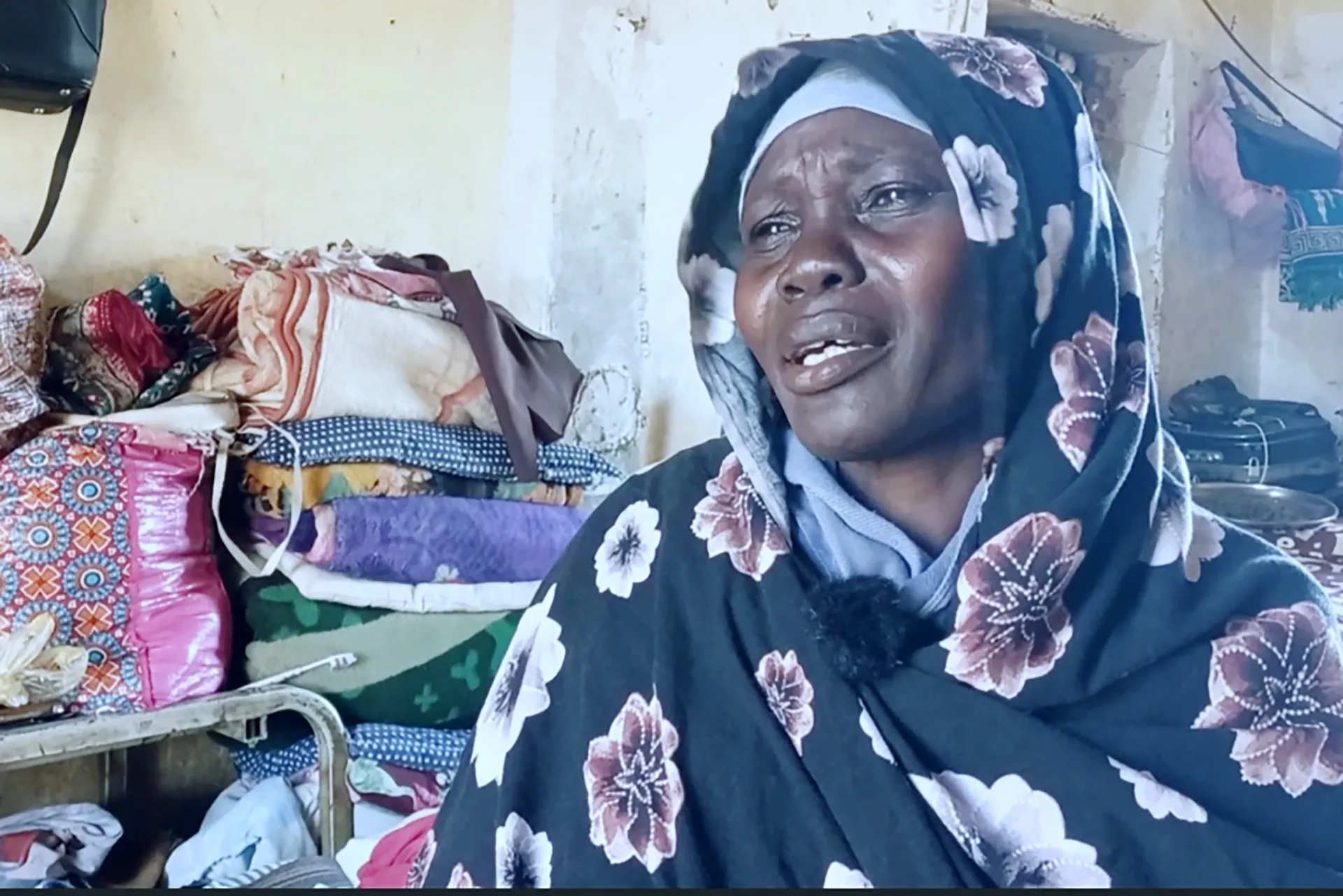
Nasma gently rocks a baby boy who has her smile and curious eyes, yet he resembles none of the three fighters from the Rapid Support Forces (RSF) who gang-raped her two years ago in the Sudanese capital.
Speaking to Agence France-Presse, Nasma, 26, says as her infant clings to her while listening to his favorite song, “I saw their faces, and I still remember them.”
Her son, Yasser, is one of thousands of children born to women who survived rape during the three years of war between the Sudanese army and the RSF.
A Weapon of War
Rape is being used in Sudan as a weapon “for war, domination, destruction, and genocide,” and “to destroy the fabric of society and alter its composition,” according to Reem Alsalem in remarks to AFP.
Nasma’s family fled Khartoum at the start of the war, but a year later she returned to retrieve birth certificates, her university graduation papers, and a death certificate her family needed to begin a new life.
In the Khartoum Bahri area, RSF fighters stopped the bus she was traveling on, ordered passengers to disembark, and separated the men from the women.
While a third fighter was assaulting her, Nasma lost consciousness and woke up the next morning at dawn. “I went outside and saw one of the men who had been on the bus shot dead,” she recalls.
Systematic Violence
Nasma’s testimony matches the methods attributed to RSF fighters, whom UN experts accuse of carrying out systematic sexual violence across the country, including using it as a tool of “genocide” in Darfur.
Overwhelmed by trauma, Nasma — a pseudonym used to protect her identity — did not realize she was pregnant until her fifth month. She only made the final decision to keep the baby on the eve of giving birth.
“My son is not guilty,” she says. “Just as it was not my fault. Why should he grow up without knowing his mother?” She refused to let him suffer “childhood trauma or end up in a bad home.”
Double Injustice
Salima Ishaq Al-Khalifa says the overwhelming majority of rape victims never report what happened to them, while many abortions and adoptions also go undocumented.
“In one town in Darfur alone, there are hundreds of girls who were raped, and not a single one sought medical care. Most of them are pregnant,” said UN humanitarian coordinator Denise Brown.
Alsalem says the stigma imposed on rape survivors in conservative communities deepens their suffering.
“Families have abandoned their daughters, and husbands have divorced their wives after they were raped. We are re-victimizing women who bear no guilt,” she said.
While many families chose to raise the children in secrecy, other women faced rejection, marginalization, or even accusations of collaborating with the RSF.
An Ongoing Tragedy
In a straw shelter in the town of Tawila, where hundreds of thousands of displaced people have sought refuge, Hayat, 20, told AFP how she was raped last year while fleeing the Zamzam Camp after RSF forces stormed it.
During the assault on the camp, which had housed more than half a million displaced people, the forces killed more than a thousand people and carried out systematic rape targeting non-Arab ethnic minorities, according to the United Nations.
RSF fighters also circulated videos claiming that raping women from ethnic minorities would “honor” their lineage.
War on Women’s Bodies
Hayat arrived in Tawila in deep shock, carrying her four-month-old baby with round cheeks.
“I hope he will have a better future. I hope he will not live as we did,” she told AFP.
Violence against women has long been used as a weapon of war in Darfur, which witnessed bloody campaigns against ethnic minorities carried out by the Janjaweed militias allied with the Sudanese army — forces that later evolved into the RSF.
The Janjaweed were accused of committing crimes against humanity, including mass rape, during the early 2000s.
In a field in Darfur, Halima was first raped as a teenager by a herder. She was assaulted again while fleeing to Zamzam camp in 2022, and a third time while escaping the camp after the RSF attack.
Now 23, Halima says emergency contraception provided by doctors in Tawila “saved” her from becoming pregnant with a third child conceived through rape.
AFP met many rape survivors in Tawila who became pregnant while fleeing the fall of El Fasher, the capital of North Darfur, to RSF forces in October 2025 — an operation that killed at least 6,000 people within three days.